Tropical Flower Embroidery Review
As a designer who spends half the day staring at stitch charts and the other half arguing with thread tension, I don’t just look for pretty pictures. I look for viability. When evaluating a design for real-world application—whether it’s a boutique order or a quick Etsy listing—the gap between a digital mockup and a stitched reality is where most projects fail. Recently, I took a close look at Flower, Tropical Flower, Hawaiian Flower, a graphic asset marketed heavily toward digital cutting and general crafting. My goal here is to strip away the marketing fluff and evaluate this as an embroidery file candidate, specifically for those of us looking to create tangible, sellable products.
First Impressions: Mood and Visual Personality
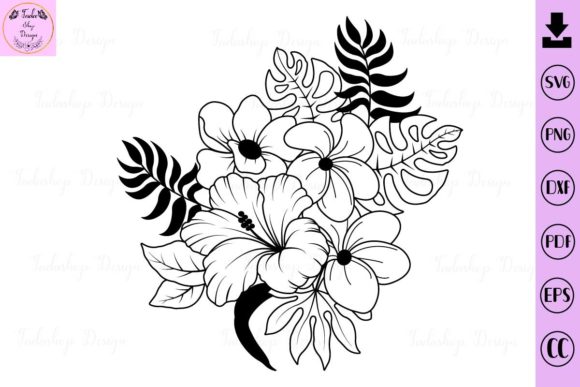
The moment you open the file, the intent is clear. This isn’t a minimalist line art piece; it’s a statement. The name Flower, Tropical Flower, Hawaiian Flower suggests vibrancy, warmth, and a distinct summer aesthetic. In terms of visual personality, it feels bold and organic. It doesn’t try to be delicate lace; it aims for impact. For a crafter or small business owner, this distinction matters immensely. You aren’t designing a subtle monogram for a corporate retreat; you are creating a focal point for a handmade product that needs to grab attention on a crowded craft fair table or in a scrolling social media feed.
The layout appears designed to hold its own on larger canvas areas. It has a natural flow that suggests movement, which is crucial when translating 2D graphics into 3D textile structures. If you are looking for something understated, this might not be your go-to. But if you want a handmade product that screams "summer vibes" or "tropical getaway," the mood hits the mark immediately. It feels like a design meant to be seen, not just noticed.
Real-World Application: Where Does It Fit?
I spent some time mentally mapping out where this design would actually shine in a production workflow. Let’s talk about the tote bag design. A plain canvas tote is often boring until it gets a splash of color. Placing a vibrant tropical flower center-stage transforms a generic item into a branded accessory. The scale of this design likely works well for standard 5x7 or 6x10 hoops, allowing it to dominate the front panel without overwhelming the fabric.
Then there is the apparel angle. Think sweatshirt embroidery or heavy cotton tees. The weight of these fabrics can handle the density required for a detailed floral print. I imagine this looking particularly strong on a neutral background—a heather grey hoodie or a crisp white tee. However, we need to be careful about dark fabric. If the original graphic relies on negative space or very fine details that disappear against black denim, you’ll need to plan your underlay stitches carefully to ensure the colors pop. For baby embroidery, this might be too bold for a onesie, but it could work beautifully on a nursery wall hanging or a large blanket where the viewer stands back rather than inches away.
Another strong use case is the embroidered patch. If you are selling patches as accessories for denim jackets or backpacks, this design offers enough detail to justify a higher price point. It looks like a finished product on its own, which reduces the need for excessive additional embellishment. For holiday embroidery, while it’s distinctly tropical, it could find a niche in Christmas markets in warmer climates or as a unique alternative to traditional holly designs.
The Technical Reality: Stitching Challenges
This is where the rubber meets the road. Just because a file says "SVG" or "Clipart" doesn't mean it’s ready for the needle. As a reviewer, I have to warn you about potential pitfalls. The primary concern with any dense floral design is stitch density. If the petals are packed too tightly, you risk puckering, especially on lighter fabrics. You must check the digitization (if you are converting this) or the pre-made file settings to ensure the machine isn’t overworking the cloth.
Consider the hoop size constraints. If the design is intricate, trying to fit it into a smaller hoop might force you to reduce the scale, which kills the impact. Conversely, a massive design might require multiple hooping shifts, introducing registration errors. Always test the design on scrap fabric first. I cannot stress this enough. Watch how the threads lay down. Do they sit flat, or do they stand up like bristles? That tells you everything about the quality of the fill stitch.
There is also the issue of thread colors. A tropical flower usually implies bright yellows, reds, and greens. On a sewing machine, transitioning between these colors can sometimes leave unsightly tails or cause blending issues if the colors are too similar yet distinct. You need to plan your color stops wisely. Also, inspect the small details. Are there tiny leaves or stamens that might get lost in the texture of a towel or a sweatshirt? If the detail is too fine, it will just look like a blob after stitching. Test it in black and white mockups to see if the contrast holds up without color distraction.
Business Impact and Customer Perception
For the Etsy seller or small shop product creator, the difference between a good design and a great one is often customer trust. A poorly executed embroidery job looks cheap, regardless of the design's beauty. But a clean, well-stitched Flower, Tropical Flower, Hawaiian Flower signals professionalism. It shows you care about the finish. When a buyer receives a personalized gift or a custom apron with sharp, vibrant stitching, they are more likely to leave a positive review and recommend your craft business.
This design has high giftability. It feels celebratory. Whether it ends up on a kitchen towel for a housewarming or a pillow cover for a new apartment, it brings joy. That emotional connection is what drives repeat sales. It fits perfectly into the print templates and graphics category for digital sellers who want to offer physical fulfillment options, but its strength lies in the tactile experience of the final finished product.
Practical Designer Notes for Success
To ensure this design performs well in your hands, follow these practical steps:
- Stabilizer Selection: Never skip the stabilizer. For a dense floral design, you likely need a cut-away stabilizer for stability during washing, or a high-quality tear-away for temporary projects. The wrong choice leads to distortion.
- Fabric Texture: Avoid highly textured fabrics like bouclé or thick chenille unless you are an expert. The needle needs a smooth path to execute precise satin stitches. Stick to cotton, linen, or stable blends for the best results.
- Licensing Check: Before you start selling commercial embroidery items, verify the license. Many assets labeled as clipart have restrictions on commercial resale. Ensure you have the right to sell finished goods made from this design.
- Mockup Testing: Use proper stabilizers and test it in both light and dark fabric backgrounds. A design that looks great on white might vanish on navy blue if the thread choices aren't opaque enough.
- Digital vs. Physical: Remember that a digital embroidery file or SVG is just a blueprint. Your skill in hooping, threading, and finishing determines the final outcome. Don’t blame the design if your technique isn’t dialed in.
In conclusion, Flower, Tropical Flower, Hawaiian Flower is a versatile, high-impact asset. It’s not a subtle background pattern; it’s a hero design. If you approach it with technical caution—respecting stitch density, choosing the right fabrics, and planning your color transitions—it can elevate your custom apparel and personalized gifts significantly. It’s a solid addition to any designer’s library for those times when you need to make a bold, beautiful statement.