Line Leaves Printable Art, Wall Arts Embroidery Review
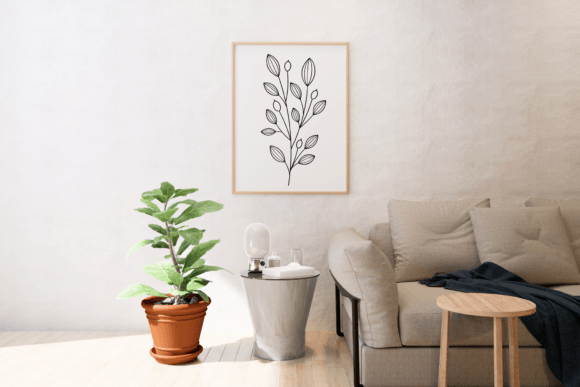
When I first opened the Line Leaves Printable Art, Wall Arts file to test it for a client project, my initial reaction was one of quiet appreciation. In a market flooded with overly complex floral patterns and dense fill stitches that demand hours of machine time, this design stood out for its restraint. It is a minimal line botanical print that captures the essence of wild flowers without getting lost in the weeds. As an experienced designer who has stitched everything from delicate baby bonnets to heavy-duty aprons, I know that simplicity is often the hardest thing to execute well. This piece manages to feel airy and organic while remaining structurally sound enough for real-world production.
The First Stitch: Visual Personality and Mood
The visual personality of Line Leaves Printable Art, Wall Arts is undeniably modern and gallery-ready. The aesthetic leans heavily into the "less is more" philosophy, utilizing clean lines that mimic the look of high-end wall decor translated onto fabric. When I laid out the digital embroidery file on my screen, the layout felt balanced. There are no chaotic clusters of petals or confusing overlaps that usually plague line art conversions. Instead, the design breathes, allowing the negative space to do as much work as the stitching itself.
This mood translates perfectly to specific product categories. It feels right at home on a nursery mobile, a soft baby onesie, or a sophisticated tote bag for a boutique owner. The design does not scream for attention; rather, it whispers elegance. For a small business owner looking to create a cohesive brand identity, this embroidery design offers a level of professionalism that elevates the perceived value of the finished product. It suggests that the maker cares about details and style, which is crucial when building trust with customers on platforms like Etsy.
Real-World Application: From Screen to Fabric
I put Line Leaves Printable Art, Wall Arts through a rigorous test scenario recently. A local client needed custom embroidered patches for a new line of sustainable kitchen towels. They wanted something that looked like a modern illustration but had the tactile quality of thread. The wild flower theme fit their branding perfectly. I transferred the design onto a cotton twill using a tear-away stabilizer and ran it through the machine.
The result was striking. The running stitch technique used in the lines created a fluid motion that mimicked hand-drawing. On the white tea towel, the contrast was crisp, and the leaves appeared almost three-dimensional due to the subtle variations in line weight. However, this success wasn't accidental. The design's success relied heavily on the choice of thread colors. I opted for a muted sage green and a dusty terracotta, which allowed the botanical theme to shine without overwhelming the simple background. If I had chosen bright primary colors, the delicate nature of the Line Leaves Printable Art, Wall Arts would have been lost.
This versatility extends beyond kitchen linens. Imagine this design on a sweatshirt back, a denim cap, or even as a decorative accent on a pillow cover. The minimal nature of the graphics means it works well on both light and dark fabrics, provided you select the correct underlay and thread density. For a craft fair booth, having a collection of products featuring this design could create a unified look that draws buyers in. It is the kind of asset that allows a handmade shop to scale up production without sacrificing the "handcrafted" feel that customers crave.
Where Caution is Key: Technical Limitations
While I am generally enthusiastic about this file, every embroidery designer knows that there are pitfalls to watch out for. The very features that make Line Leaves Printable Art, Wall Arts beautiful—its thin lines and open spaces—can be tricky on certain materials. If you attempt to stitch this on a stretchy fabric like a jersey knit t-shirt without a strong stabilizer, the lines may pucker or distort. The lack of dense fill areas means there is less structural integrity to hold the fabric flat during stitching.
I also advise caution when scaling this down. While it looks great on a standard 4x4 hoop, shrinking it too small for a tiny patch or a hat front might cause the fine lines to merge together, losing the definition that makes the design special. Similarly, on textured fabrics like a chunky wool sweater or a rough burlap, the smooth lines might get lost in the weave. For these applications, a thicker thread weight or a slightly larger hoop size would be necessary to ensure the design remains legible.
Another consideration is the washability factor. Since the design relies on long, continuous lines rather than tight satin stitches, frequent washing can sometimes lead to fraying if the thread tension isn't perfect. Always test your thread colorfastness before shipping a finished product to a customer. For items that will see heavy use, like work aprons or kids' clothes, you might want to reinforce the edges or add a secondary layer of stitching to ensure longevity.
Design Notes for the Practical Maker
If you are planning to incorporate Line Leaves Printable Art, Wall Arts into your commercial embroidery projects, there are a few technical steps you must take to guarantee a professional outcome. First and foremost, always test the design on scrap fabric that matches your final material. Check the stitch density carefully; if the lines are too sparse, they may look unfinished, but if they are too dense, the fabric may pucker. Adjusting the stitch length and width settings can make a significant difference in how the final finished product looks.
Stabilizer selection is non-negotiable here. Because the design features long, sweeping lines, a cut-away stabilizer is often safer than a tear-away, especially for items that will be stretched or washed frequently. This ensures the lines remain straight and true over time. Also, inspect the small details of the leaves and stems closely. Sometimes, when converting vector art to embroidery files, tiny corners can become jagged. You may need to manually adjust the digitizing points to smooth out any harsh angles before sending it to the machine.
Don't forget to verify your licensing terms. Whether you are selling physical goods or offering digital embroidery files, you need to know exactly what rights you have. Some designs allow for unlimited commercial use, while others restrict the number of units you can sell. Checking these details upfront protects your craft business from legal issues later on.
Final Verdict on Value and Appeal
In conclusion, Line Leaves Printable Art, Wall Arts is a versatile and high-quality asset for anyone serious about textile design. Its ability to bridge the gap between digital wall art and tangible embroidery makes it a unique tool in a creator's arsenal. It works beautifully for personalized gifts, boutique branding, and holiday decorations where a touch of nature is desired without being overpowering.
For the Etsy seller or small shop product creator, this design offers a way to differentiate your offerings. It speaks to a modern audience that values minimalism and quality craftsmanship. By paying attention to the technical nuances discussed above—hoop size, stabilizer choice, and thread contrast—you can transform this simple line drawing into a stunning, marketable item. Whether you are creating a custom apparel line, a set of embroidered patches, or a series of home decor items, this design provides a solid foundation for building a loyal customer base. Just remember to test, refine, and respect the limitations of the medium, and you will find that this piece delivers far more than just a pretty picture.